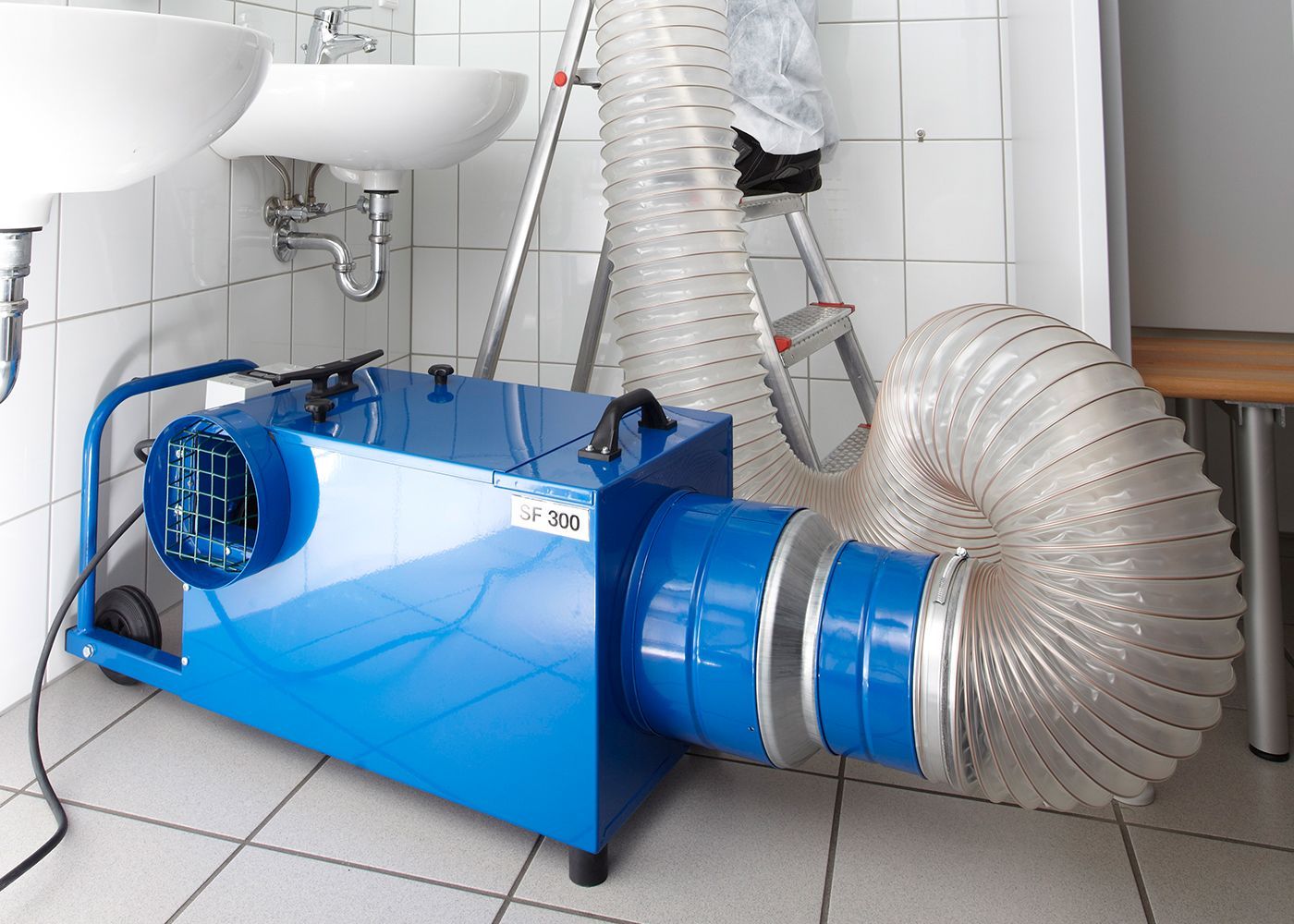












Cleaning of a ventilation system / air duct with compressed air
Other topics from this section:The regular inspection and cleaning of ventilation systems guarantees the owner a perfect hygienic and technical condition of his ventilation system and can also contribute to energy savings. Contamination of the ventilation ducts leads to discrepancies in air flow, which has an effect on the indoor climate and thus on the indoor air quality.
If the volume flows calculated according to the ventilation concept are no longer achieved, the fan power is often simply increased, resulting in additional energy consumption. This is not inevitable. One solution for cleaning small rectangular or round air ducts is compressed air cleaning using the Wöhler helicopter nozzle.
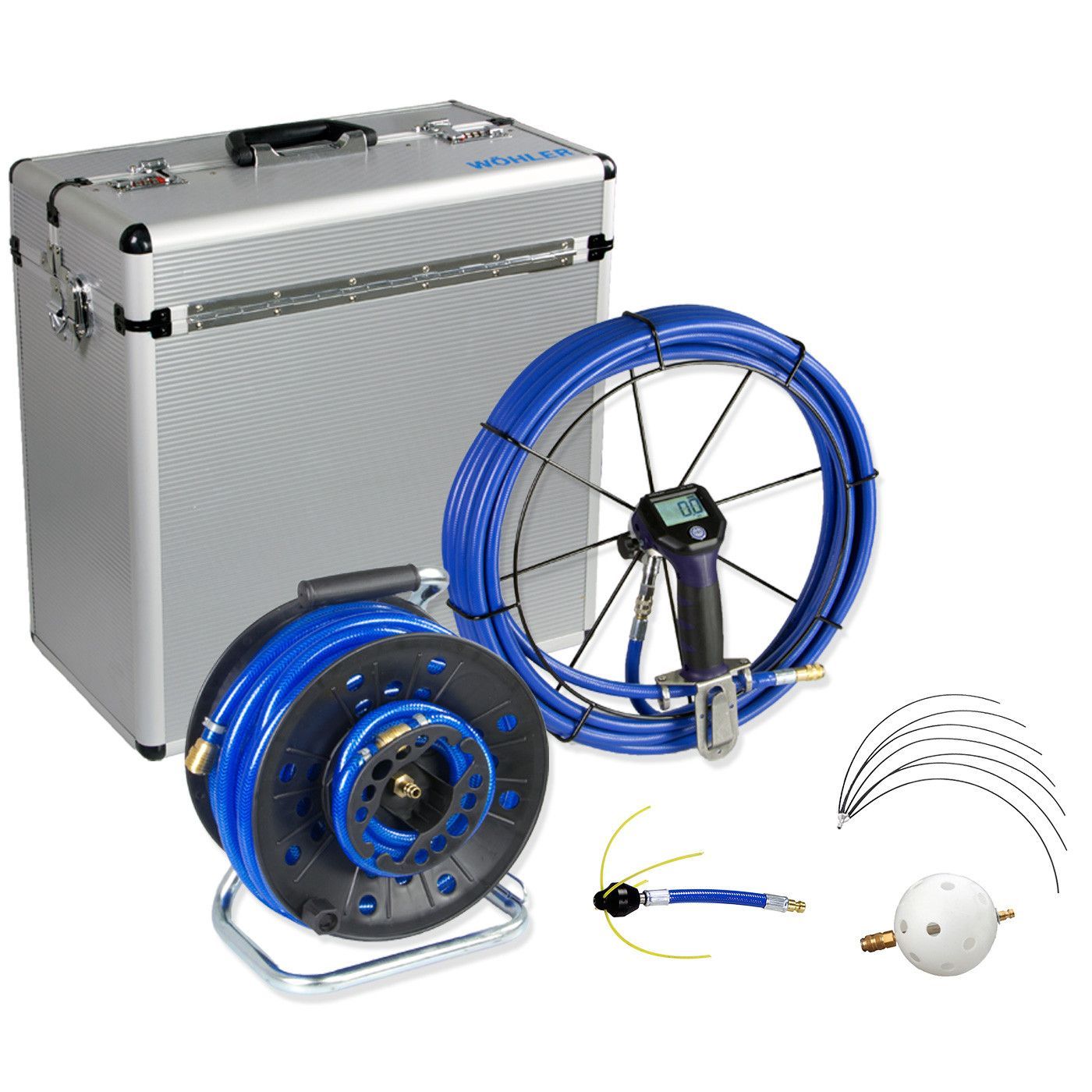
For cleaning larger ventilation ducts, compressed air cleaning with a compressed air whip is more suitable.
PERFORMING COMPRESSED AIR CLEANING OF VENTILATION SYSTEMS
In most cases, the cleaning of ventilation systems with compressed air is done using the negative pressure method, on the one hand to support the cleaning and on the other hand to prevent the environment from being polluted with the removed dust. First of all, all openings not required for cleaning are closed or sealed. Then, a suction is created within the ventilation system by means of a dust trap or an industrial vacuum cleaner. When cleaning ventilation systems with compressed air, all secondary ducts should be cleaned first and then the main duct.
The helicopter nozzle is plugged into a compressed air reel or hose and connected to a compressor. The compressed air flows out of the drill holes at high speed and removes the dirt. The cleaning effect is further enhanced by the rotation of the nozzle head with the cleaning wires attached to it.
The helicopter nozzles are available in two versions: rotating backwards and forwards. In the case of the forward rotating helicopter nozzle, the holes are positioned in such a way that the dirt is blown away in the direction of thrust. With the backward rotating helicopter nozzle, the air flows out of the holes against the direction of thrust. The advantage of the backward rotating nozzle is that it moves through the ventilation system almost by itself.
After cleaning is completed, a camera inspection of the ventilation system and/or an air volume flow measurement at the air outlets should be carried out again so that the before/after effect can be documented.