












Camera inspection of a house connection pipe
Other topics from this section:House connection pipes are inaccessible drainpipes buried under ground or routed through the base plate of the house to drain wastewater to the sewer connection. The sewer connection is the pipe between the municipal wastewater line and the plot boundary or the first sewer cleanout on the plot. It is generally the property owner’s responsibility to build, maintain and fix building drain lines and sewer connection lines within the boundaries of a privately owned plot of land.
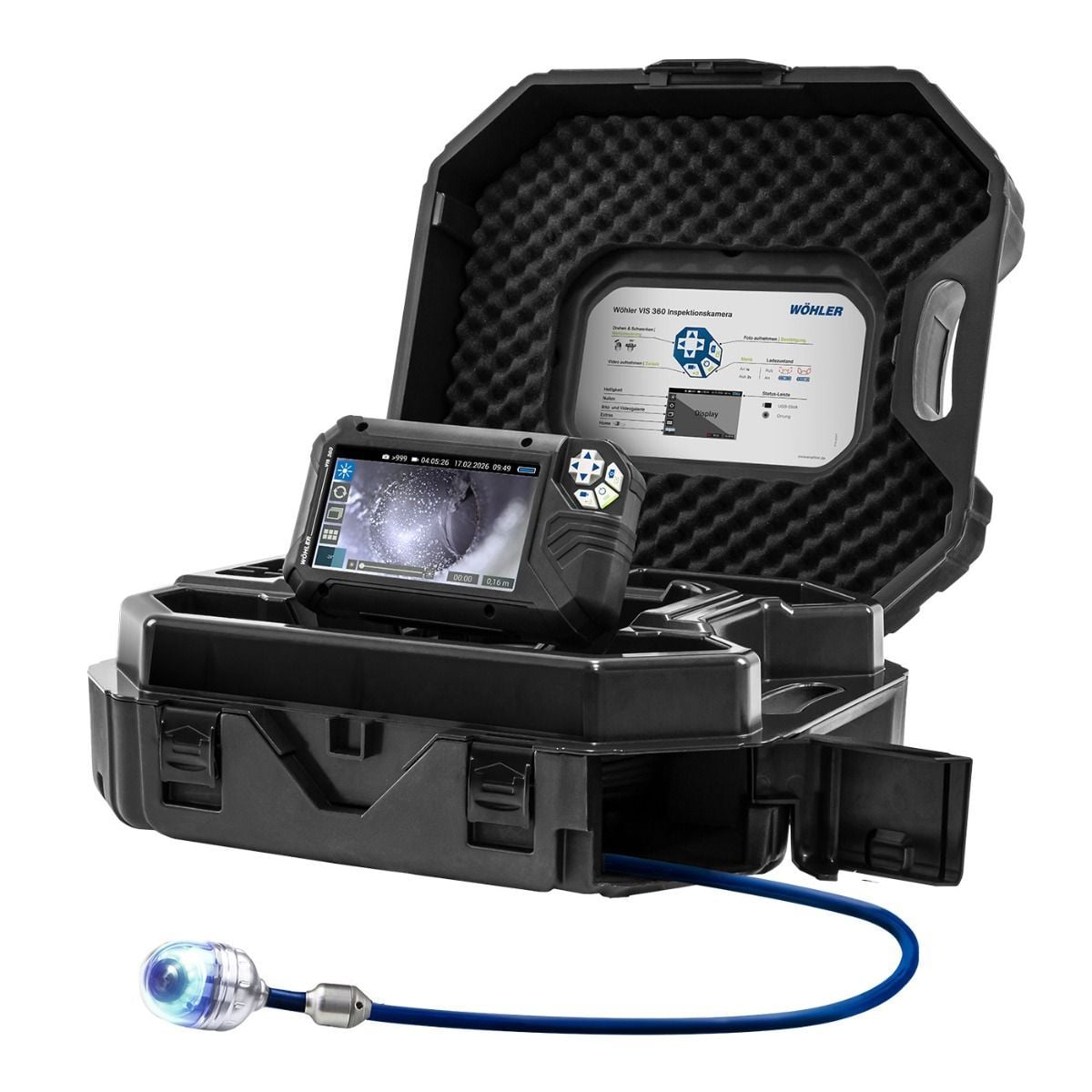
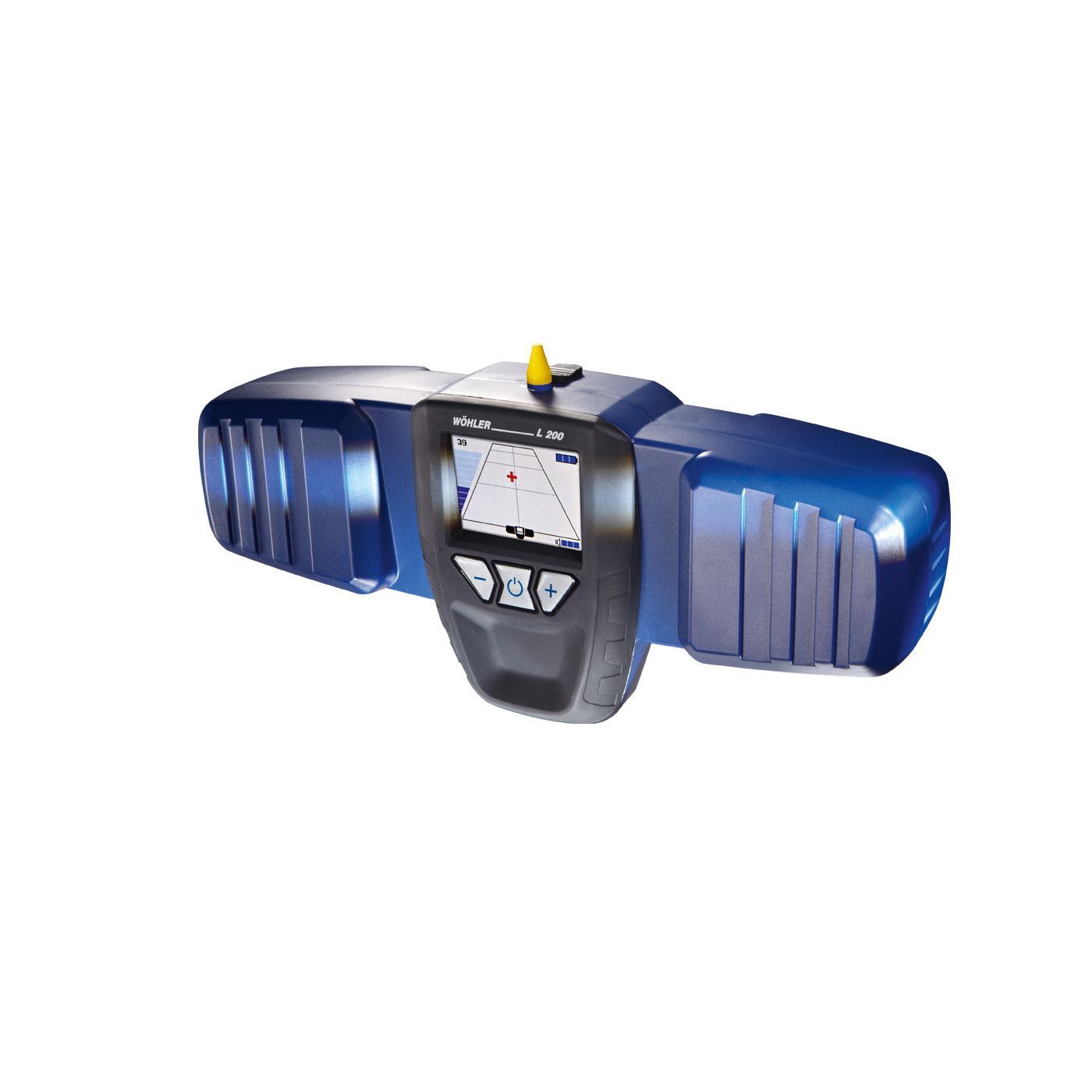
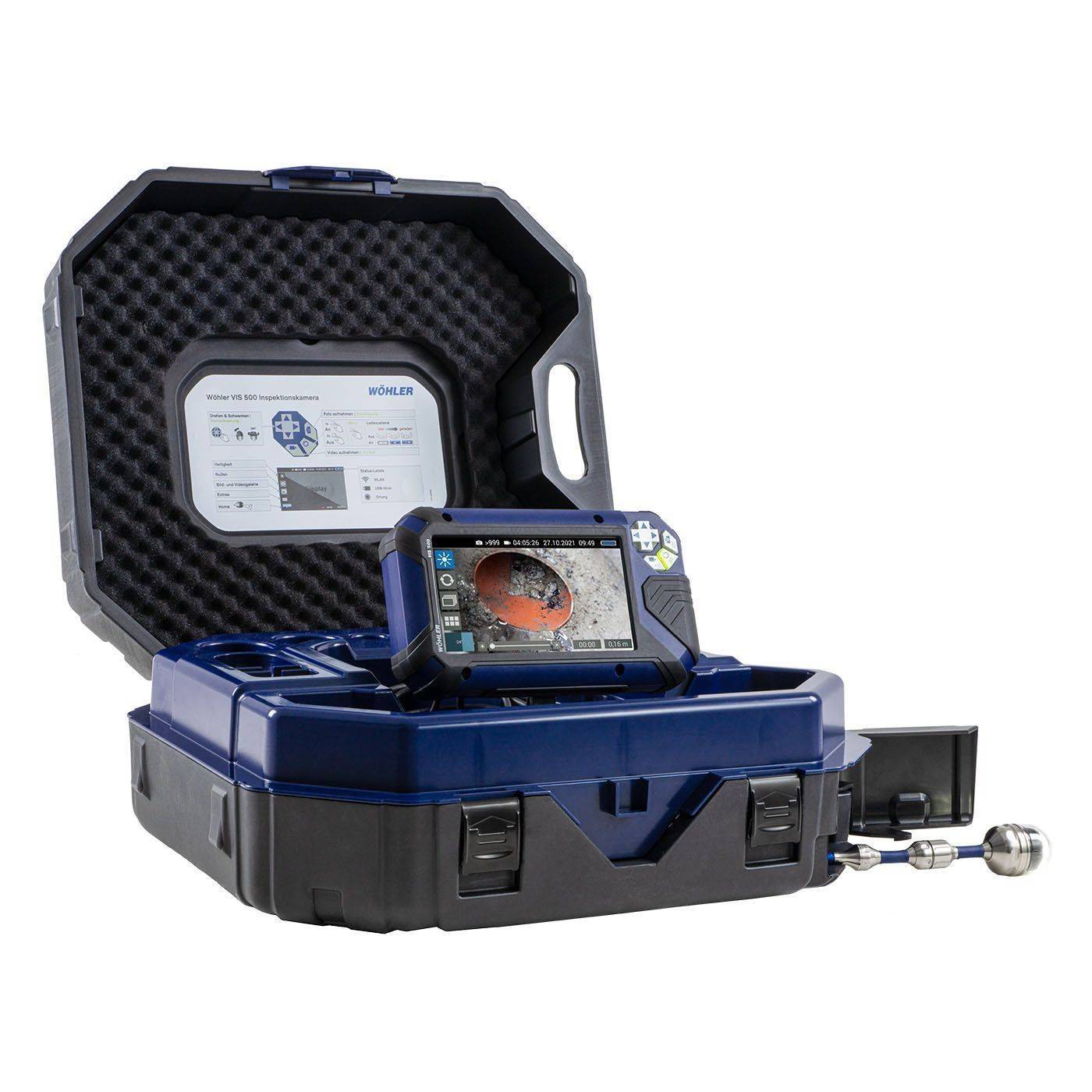
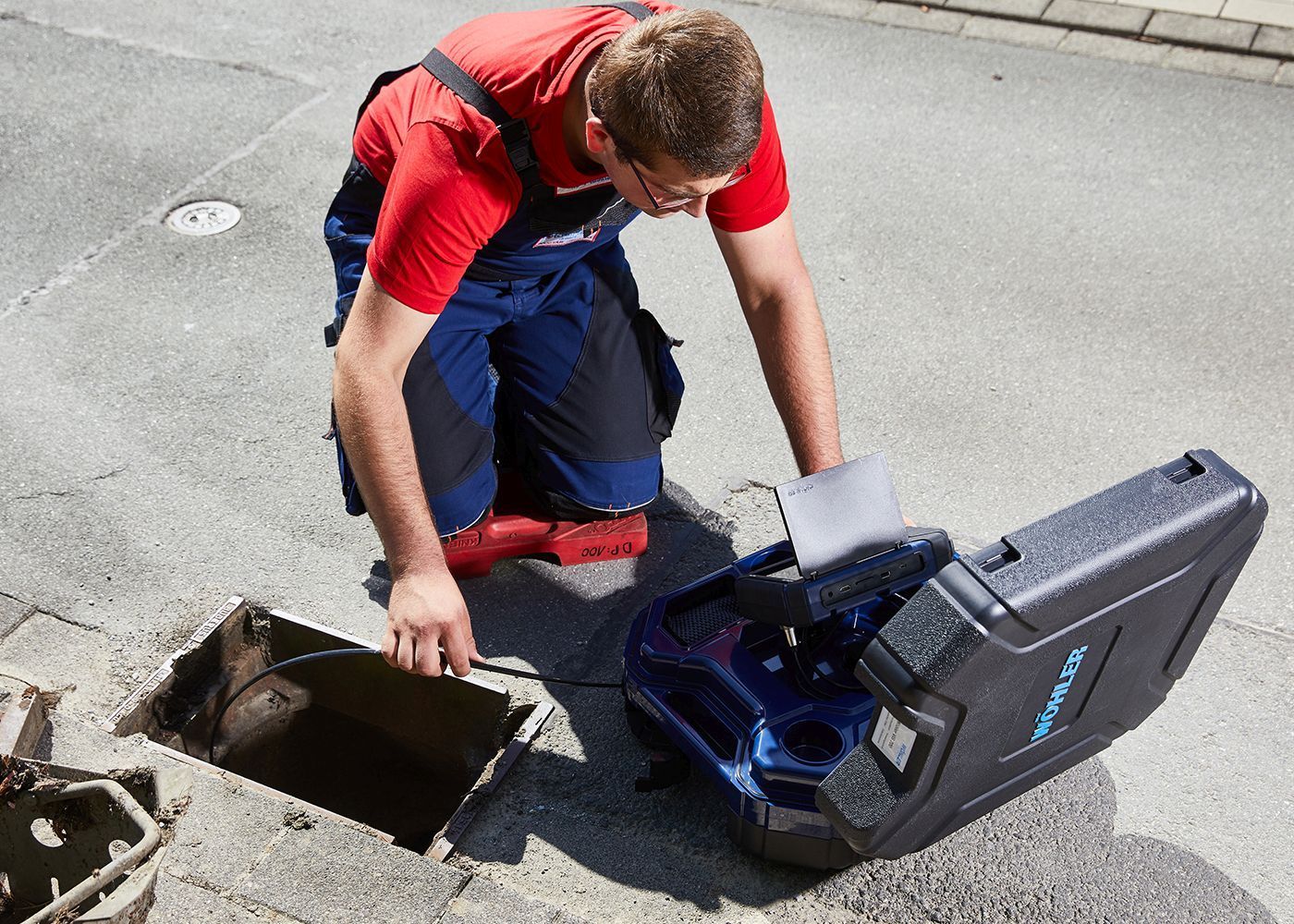
Performing camera inspections of house connection pipes
The inspection camera can be inserted into the house connection pipe, for example, via a floor drain. It proves beneficial if the inspection camera used to visually inspect the house connection pipe is equipped with a pan and tilt color camera head to examine the walls and branch pipes. However, position indicator and home function prove invaluable to ensure the operator does not lose a sense of orientation in the house connection pipe during the camera inspection. The home function ensures it is possible to return the camera head to its starting position at any time, while the position indicator helps the operator to assess the slope/gradient of the building drainpipes. All of these features plus a digital distance counter on the camera monitor simplify navigation considerably.
The course of drain lines is often unknown in many buildings; but these can be traced using a locator. A cross-hair on the locator indicates the position of the signaling camera head. In addition, the distance to the transmitter is also indicated by a tone that increases in volume as it leads you directly to the camera head and, as a consequence, to the point of damage. Precisely locating and zeroing in on the damage is certainly the most customer-friendly option to pinpoint damage, as this enables repairs to be made by breaking open as little as possible of building structures.
It is helpful to record the video imagery taken by the camera for quality assurance purposes. Documenting the visual inspection is not only very important for the company doing the work, it is also of interest to customers who are able to view the inside of their drainage system. When damage is presumed, a video recording offers a good basis to analyze the extent of any damage and draw up the best suggestions for repairs.
Summary:
- The locator can determine the course of the house drain line
- Pinpoint damage location with the aid of the inspection camera and a locator, so as little as possible of the base plate needs to be opened
- Save imagery for documentation, quality assurance and customer acquisition