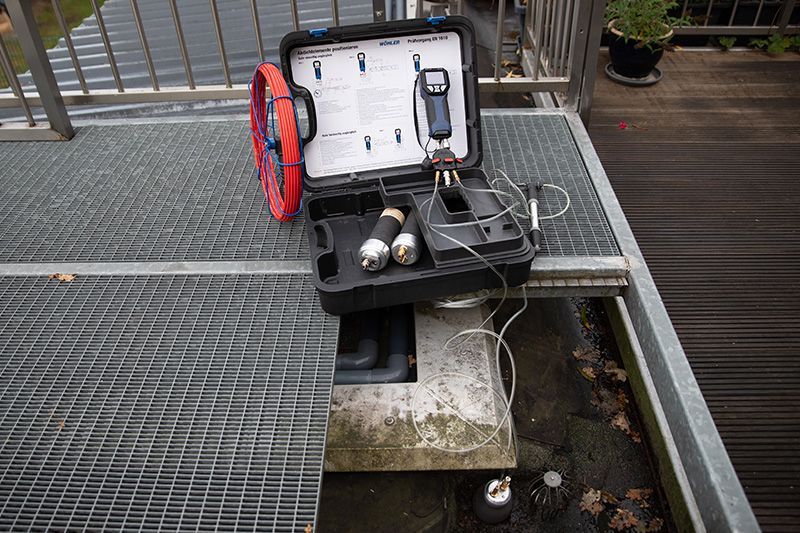












How to inspect a flat roof and drainage systems
Other topics from this section:Leaky flat roofs and resulting damage such as black spots on the interior ceiling, or standing water on the roofs - are a frequent occurring issue. In order to clarify the causes, often only an assessment and detailed inspection of the flat roof as well as the drainage system/rainwater downpipes can help. After all, only an intact drainage system protects the roof structure and facade from moisture damage and, in some cases, later mold growth.
High image quality and the ability to create and send an inspection report directly via app make it much easier to inspect drainage systems on flat roofs.
PERFORMING AN INSPECTION ON FLAT ROOFS & DRAINAGE SYSTEMS
If damage or leaks are visible on the flat roof, a detailed roof inspection must be carried out. The first step is to start with an as-is analysis. The following points are examined: 1. Roof pitch 2. Number and type of penetrations, e.g. ventilators, extractor fans, skylights 3. Waterproofing for folds, blisters, cracks, etc. 4. Roof structure, from substructure to insulation to waterproofing top layer (=surface protection) 5. Condition of the drainage pipe
Points 1 to 3 are to be documented in detail in writing and preferably with photos.
The next step is to look for or create small openings so that the roof structure can be inspected with a video endoscope. In this way, the condition of the existing roof structure and any defects, such as damp insulation, cracks or moisture on the existing moisture barrier can be determined.
During an examination with the Wohler VE 400 HD video endoscope, a small opening from Ø 0.15" is sufficient to look inside the roof structure. The large HD color display allows a comfortable view inside the roof. All images and videos can be stored on the SD card for documentation. The use of different probes (Ø 0.15" probe an Ø0.21" side view probe) is possible. This side view probe can rotate the viewing angle by 90° at the push of a button.
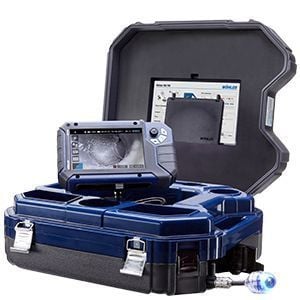
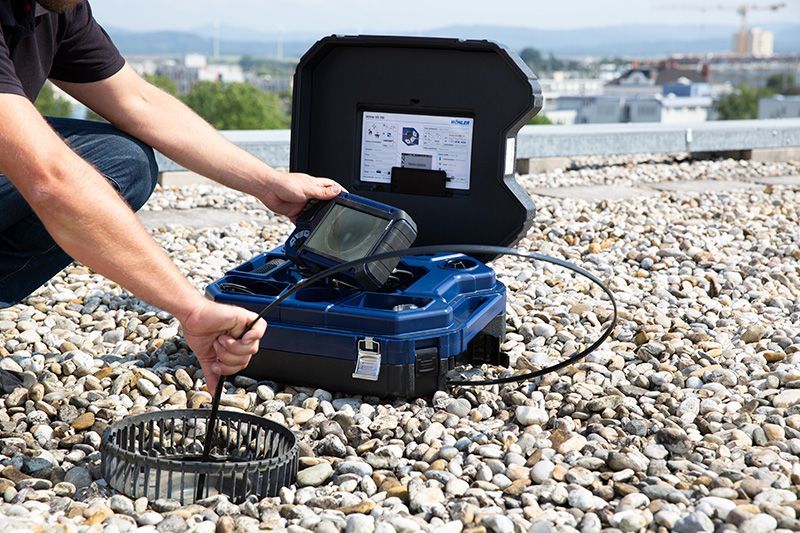
Finally, the drainage system or the rainwater downpipe is inspected. Experience has shown that the defect rate is highest here. Common defects are:
- Pipes that have slipped/broken apart
- Corrosion due to incompatibility of different materials
- Blockages due to leaves, plant debris and other substances/contaminants
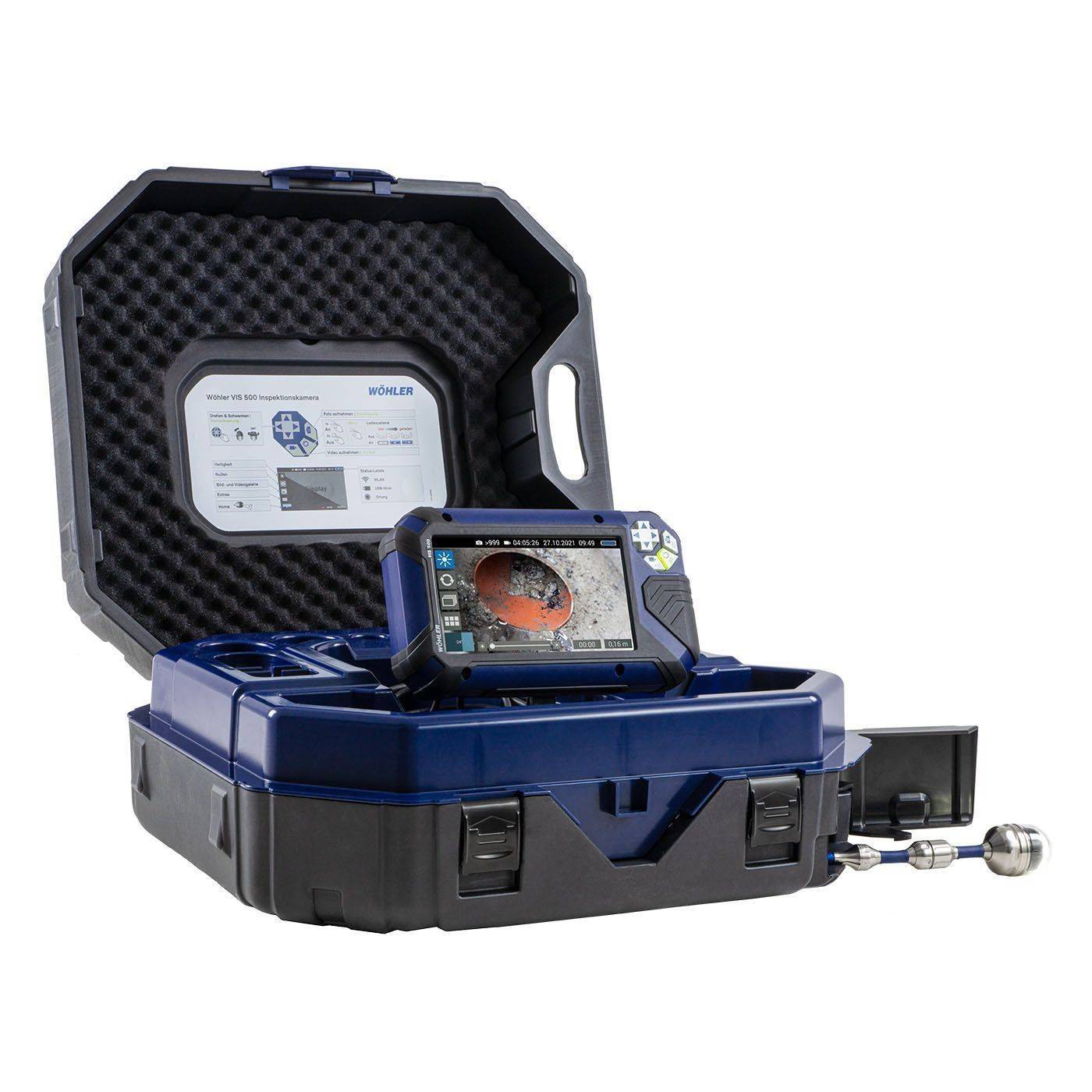
Drainage and rainwater pipes can be optimally inspected with the Wohler VIS 700 inspection camera. Damaged areas can be quickly located and documented by photo or video. A comment can be added to each image. Voice comments on video recordings are also possible. The documentation is recognized by insurance companies and also serves to ensure the quality of your own work.
This HD video inspection system can be used to view both small and large pipelines up to 8" in diameter. The two waterproof color camera heads can be easily exchanged. Thus, the Ø 1" camera head is suitable for small pipe cross-sections up to 2" diameter and the Ø 1.5" rotatable and tiltable camera head for pipes over 2.8" diameter. The inspection can be carried out up to 100' line length.
The camera head is controlled intuitively via the camera's touchscreen or via the Wöhler VIS 700 app. In addition to the position and tilt of the head, the distance count of the camera rod are also displayed. With the help of the app, an inspection report in PDF format can be easily created. Furthermore even unknown pipe courses can be traced in combination with the Wohler Locator L 200