












CO2 measurement of ambient air
Other topics from this section:In addition to oxygen, room air also contains other gases such as carbon dioxide (CO2) as well as bacteria, fungal spores and aerosols. The CO2 content is an indicator for the quality of the room air. This gas is produced during the combustion of fossil fuels and also in the organism of living beings. Humans breathe out aerosols and CO2 continuously. When people stay in a closed room, the composition of the air inevitably changes when they exhale. A high CO2 content in the air leads to lack of concentration, tiredness and headaches. In a good indoor climate, the CO2 concentration should be below 1,000 ppm. Natural fresh air contains about 400 ppm CO2. By frequent ventilation, not only the CO2 content is reduced, but also the virus-laden aerosols in the room air are diluted. This can prevent the spread of viruses (e.g.: the Corona Virus Sars-CoV-2) in closed rooms.
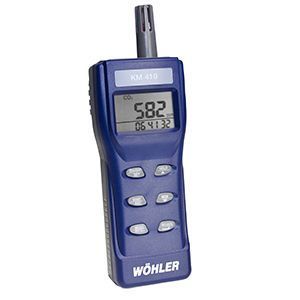
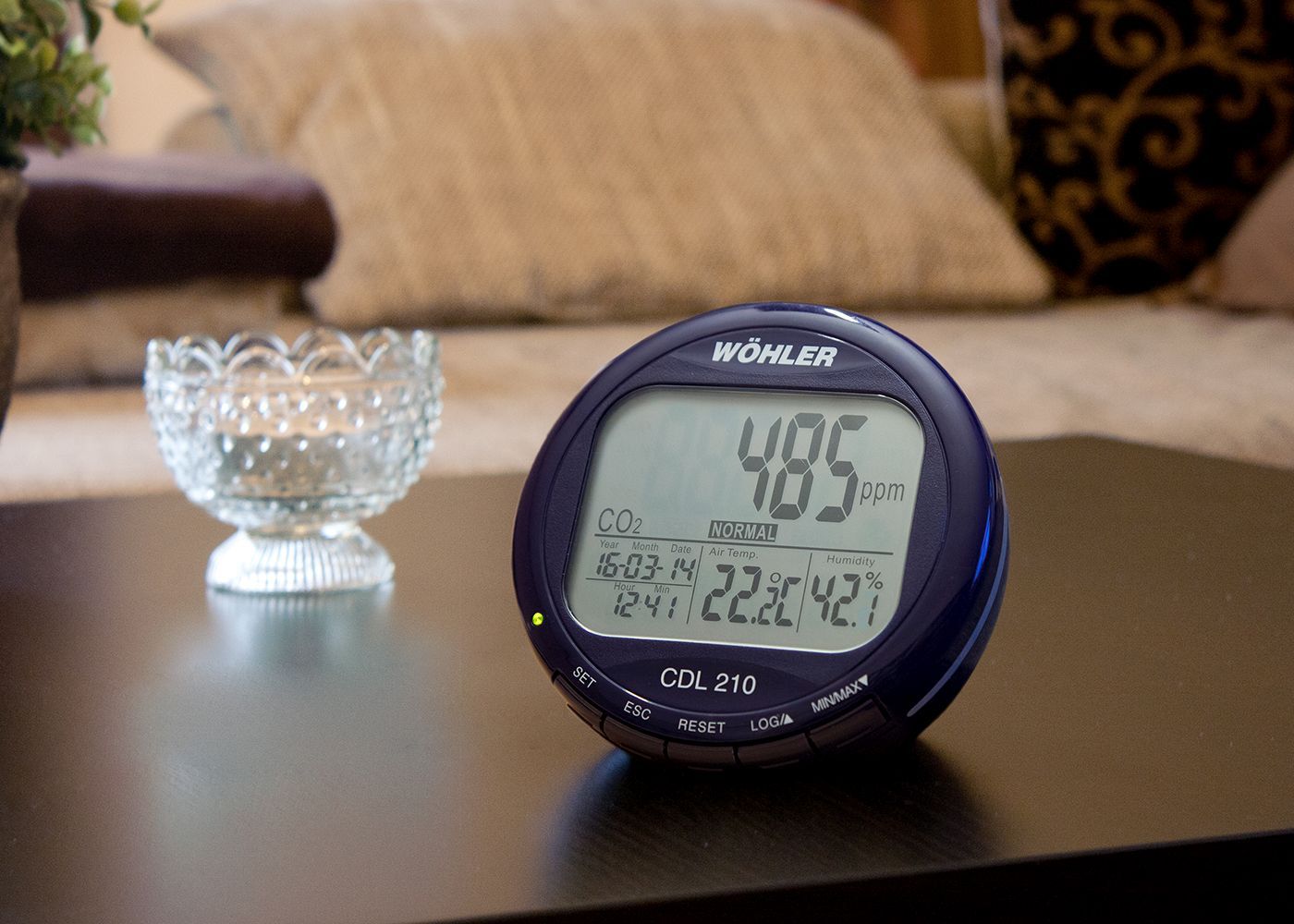
PERFORMING A CO2 MEASUREMENT (AMBIENT AIR)
For the ideal assessment and monitoring of the indoor climate, a CO2 measuring device or CO2 data logger is required. During the CO2 measurement, a CO2 data logger or indoor air quality meter can also record the temperature and humidity values as part of long-term monitoring. If the CO2 value is exceeded, the alarm signal is triggered.
Table 1: CO2 concentration in ambient air:
| CO2 concentration [ml/m3] bzw. [ppm] | Actions |
|---|---|
| < 1000 |
|
| 1000-2000 |
|
| >2000 |
|