












Leak detection on gas pipes
Other topics from this section:Regular inspection of the gas pipework system is necessary to maintain operational safety. The simplest method is a visual inspection of the gas system. This must be carried out annually in accordance with the TRGI. The smell of gas is also an indicator of whether a gas system is leaking or not.
However, the specialist cannot rely solely on such subjective perceptions, but needs a factual and objective method for checking gas pipes. In addition to the serviceability test on gas pipes, the visible part of a gas installation can be checked easily, quickly and reliably using a gas leak detector.
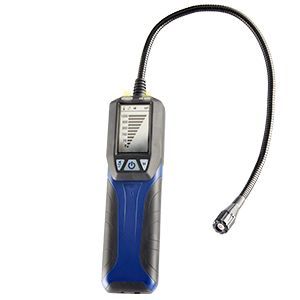
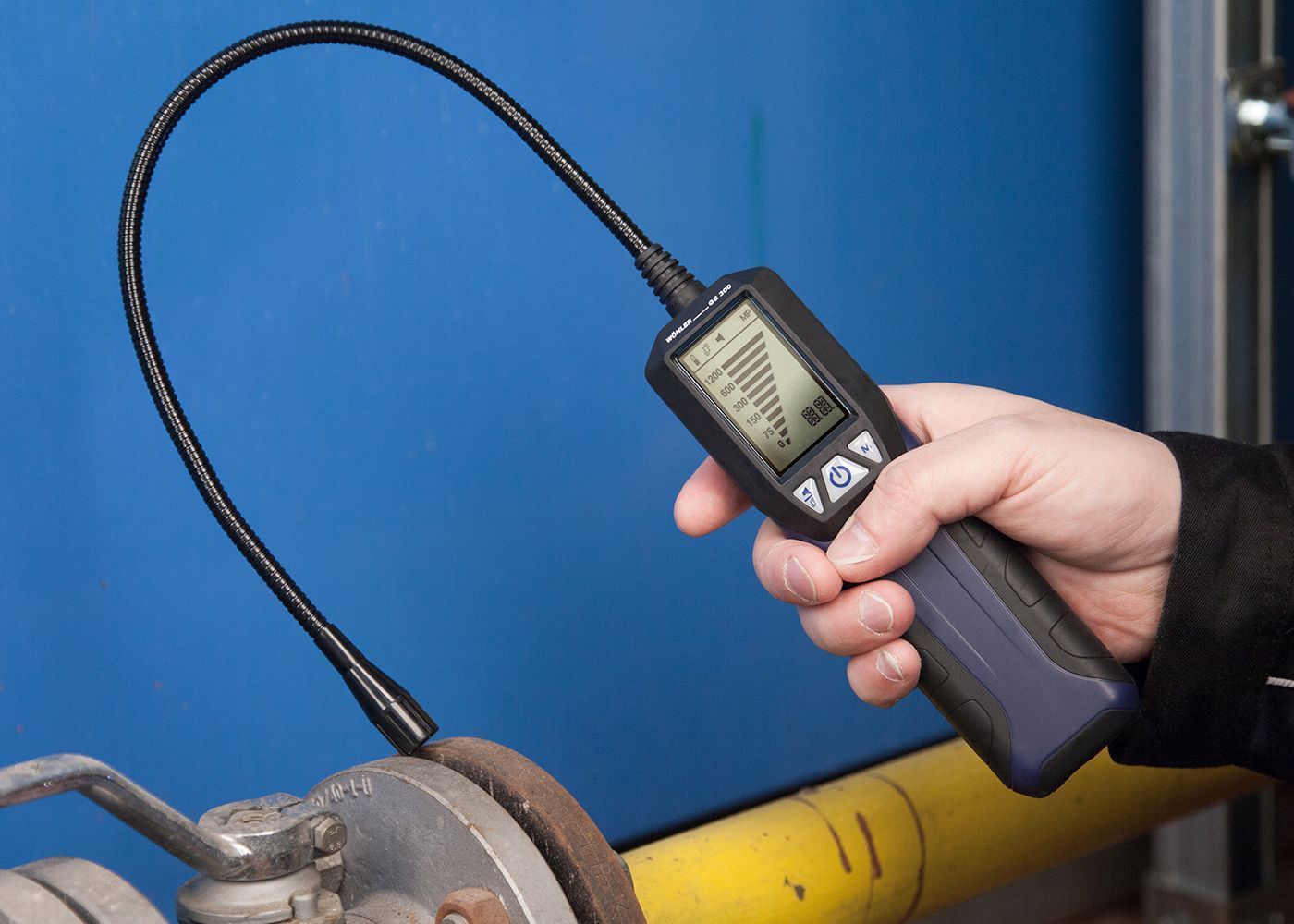
Carrying out leak detection on gas pipes
To ensure that the gas detector works precisely, it must be switched on outdoors so that the sensor at the tip of the flex probe is not calibrated in a contaminated environment.
To locate leaks in gas pipes, the visible connection points and the gas appliance connection are scanned slowly and completely. As soon as the gas laek detector approaches a leak, the bar display shows the corresponding gas concentration and the signal tone rate or vibration frequency increases in proportion to the gas concentration. A vibration alarm is particularly useful when there is loud ambient noise. It is also an advantage in dark surroundings if the gas detector is fitted with LED lights so that the working area is clearly visible.
A gas sniffer can therefore be used to precisely localise leaks that frequently occur at the connection points and at the consumer connection.
Summary:
- Regular inspection of gas pipes is necessary to maintain operational safety
- The gas detector to be used must be calibrated in fresh air before checking the gas lines
- The device used must be able to identify propane and methane.